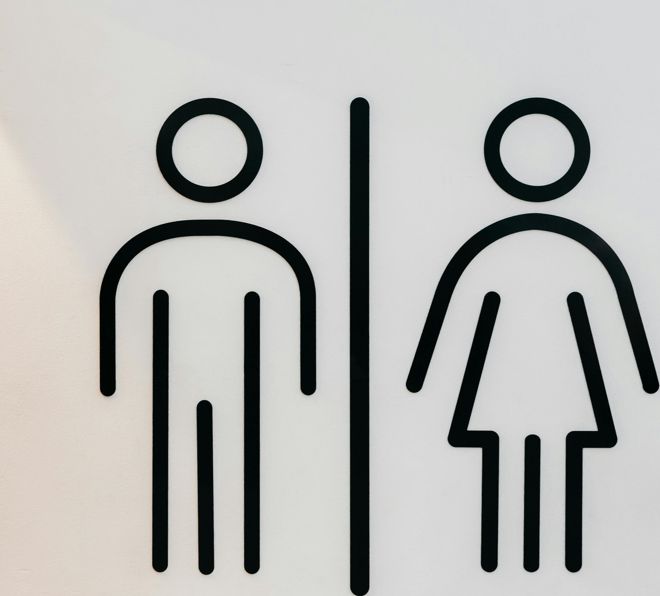
People with a stoma have the option of using:
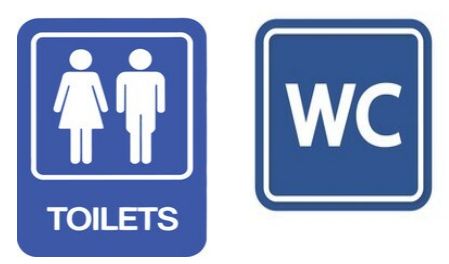
1. A standard toilet
A standard cubicle can be difficult to use as there is limited space and nowhere to place your
supplies
2. A disabled toilet
A disabled toilet offers more space but may not be suitable as often there is nowhere to
leave your supplies other than on the floor.
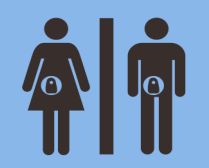
3. Stoma Friendly toilet
Stoma-friendly toilets are designed to accommodate individuals with a stoma, featuring
enhancements like hooks for bags, shelves for supplies, mirrors for appliance checks, and
bins for discreet disposal. These improvements aim to provide comfort and accessibility,
making it easier for stoma users to manage their needs in public restrooms.
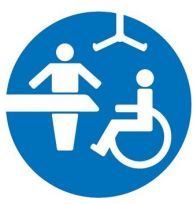
4. A Changing Places toilet
This purpose built toilet facility gives disabled people and assistants more space and the right
equipment to take care of personal hygiene, in safety and comfort.
The changing places toilet goes beyond a conventional wheelchair-accessible toilet in that it
includes additional assistive technology of a hoist, height adjustable adult-sized changing
bench, and peninsular toilet (toilet that has enough space on both sides for assistants)
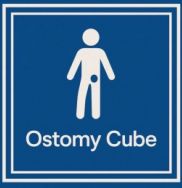
5. Ostomy cube
The ostomy cube is a toilet facility designed to meet the needs of people with ostomy bags.
It allows for the emptying of an ostomy bag while standing and can be retro fitted into any
existing toilet.
It is suitable for the home, workplace or public accessible restrooms, helping people manage
their ostomy with ease, comfort and dignity.
Keys
There is no standard key to access locked toilet facilities for a person with a disability. There are
different standards in Ireland, United Kingdom, Europe, Australia and other parts of the world.
• Ireland
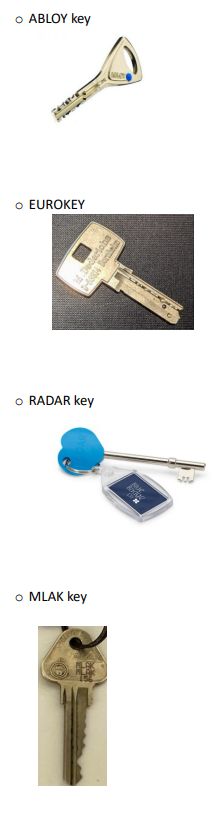
In Ireland the standard key for locked toilets is the Abloy key. For Changing Places facilities
you may need the RADAR key.
• United Kingdom
The RADAR key is the standard key for accessing both disabled toilets and Changing Places
facilities in the UK.
• Europe (Germany, Austria, Switzerland & Netherlands)
The EUROKEY is the standard for accessing wheelchair accessible toilets in these European
countries.
• Europe (Spain, Portugal, Sweden, Norway, Denmark, Finland, Belgium, Romania,
Bulgaria, Czechia Croatia & Italy)
The EUROKEY may work in the above countries but you will not be able to rely upon it as it is
not consistent.
• Europe France
Accessible toilets in France (often marked PMR – Personnes à Mobilité Réduite) are legally
required in all public buildings, shopping centers, and restaurants. Many public, station, and
highway toilets are locked, requiring a “Eurokey” for access.
In Paris, you’ll come across a unique system: Sanisettes—self-cleaning public toilets found
throughout the city.
While not part of a national key scheme and not designed specifically for use by disabled
people, sanisettes offer a relatively inclusive option for locals and tourists alike. However, as
with all automated systems, accessibility can sometimes vary depending on maintenance
and design.
• Sweden
Disabled toilet access in Sweden is generally excellent, mandated by the Discrimination Act
for public spaces, transport, and restaurants. Accessible toilets are widespread, often labeled
“RWC” (Rullstolsvänlig WC). While Eurokeys work in some, many toilets use local access
methods, and digital apps like ToaSverige help locate them
• Greece
Disabled toilet access in Greece is improving but remains limited, especially in older buildings
and smaller islands. While major tourist sites, modern hotels, and new metro stations in
Athens have accessible restrooms, many cafes and restaurants require planning. Utilizing
apps like accessaloo is highly recommended to locate usable restrooms.
• Turkey
Disabled toilet access in Turkey is improving but varies significantly, with modern, accessible
facilities commonly found in airports, top-tier hotels, and major shopping malls, while older,
smaller, or public, spaces often lack them. While many historic sites, including Hagia Sophia
and Topkapi Palace, have added accessible options, it is essential to plan ahead, as restrooms
in popular areas can be sparse or located on different floors.
• UAE
Disabled toilet access in the UAE is mandatory in public and commercial buildings, following
standards like the Dubai Universal Design Code to ensure accessibility for People of
Determination. Facilities feature wide doors, grab bars, lowered sinks, emergency alarms,
and spacious layouts for wheelchairs.
Changing Places: Specialized, larger facilities with hoists and benches are increasingly
available, with some provided by Direct Access and others available via Ecoplanet and Dubai
Access Control.
• Saudi Arabia
Disabled toilet access in Saudi Arabia is rapidly improving, guided by the Universal
Accessibility Code under Vision 2030, ensuring accessible toilets in modern malls, hotels, and
public buildings. Facilities typically feature spacious layouts, grab bars, and accessible
washbasins, with mandatory compliance for new construction, including wheelchairaccessible toilets.
• Japan
Japan sets the bar high when it comes to accessible toilets:
They are found in most public places, especially train stations and shopping centres
Often equipped with hoists, adult-sized changing tables, and emergency call buttons
Generally unlocked and free to use
• Australia
The MLAK key is the standard key that allows people with a disability in Australia to access
dedicated public facilities
• New Zealand
In New Zealand accessible toilets are generally unlocked and do not require a key for entry.
• Canada
There is no national system in Canada as each province has its own rules.
• USA
In the United States accessible bathrooms are managed different to most other countries.
Accessible toilet facilities are located within gender specific restrooms. Accessible facilities
are available for anyone to use and are often used by able-bodied people.
Where to obtain the Keys
Each country has its own method to obtain the key required to access the various facilities.
o Ireland
The ABLOY key is the standard for Ireland and is available from
Williams Locksmiths
12 Bow Lane East
Mercer Street
Dublin 2
D02 F584
Tel: 01 475 6307
Mobile: 087 243 8053.
https://www.williamslocksmiths.ie
https://www.facebook.com/williamslocksmiths/
The key costs €22.00 and can be sent by registered post for an extra €14.50.
o United Kingdom
The RADAR key is the standard in the UK for disabled toilets and Changing Places facilities.
You can get a RADAR key from most local authorities, either for free or at a low cost. You can
also buy them online and in some stores. You can buy the official N&C Phlexicare key
through Disability Rights UK or the Blue Badge Company. The key is also available from some
stores such as Boots, Careco & Amazon.
• Europe
The EUROKEY & RADAR keys are the master keys used to unlock accessible toilets in many
European countries.
Euro Key was developed in 1986 by CBF Darmstadt, a German organization for the disabled.
According to their website, the Euro Key now opens more than 12,000 toilets across Europe.
Euro Key locks are used in Austria, Croatia, Czech Republic, Germany, Hungary, Netherlands,
Poland, Slovakia, Slovenia, Switzerland and potentially other countries. A number of
databases identify the location of Europe Key toilets on a country-by-country basis, available
on the No Barrier website.
Euro Key — Available for purchase via the CBF Darmstadt website. The cost of the key is
€23,00 EUR, or €30,00 with a copy of DER LOCUS, a printed directory of handicapped toilets.
Purchase of the key is restricted to those who are entitled to use accessible toilets, and the
organization requires that proof of disability be submitted with each order.
o Australia
MLAK key is the standard key used in most of Australia.
The Master Locksmiths Access Key (MLAK) system is a Master Locksmiths initiative that
allows people with disability access to dedicated public facilities. This includes facilities in
National Parks and many Council municipalities, elevators at railway stations, the new
Changing Places facilities throughout Australia, disabled toilets that are locked, and even the
Liberty Swing.
https://masterlocksmiths.com.au/mlak/
To apply for a key https://masterlocksmiths.com.au/mlak-order-form/
How to find accessible toilet facilities
The “Way to the Restroom” is now digital. Our locations can now be found in the “WC Finder” app:
Android app:
Toilet Finder – Apps on Google Play
iOS app:
WC Finder on the App Store apple.com
https://accessaloo.com/
A number of databases identify the location of Europe Key toilets on a country-by-country basis,
available on the No Barrier website
o Ireland
Changing Places https://changingplaces.ie/find-changing-places/
o United Kingdom
Great British Public Toilet Map
https://www.changing-places.org/find
o Europe
A number of databases identify the location of Europe Key toilets on a country-by-country
basis, available on the No Barrier website
https://www.changing-places.org/find
o Australia
Changing Places www.changingplaces.org.au
https://toiletmap.gov.au/
o Canada
https://toiletsdirectory.com/canada
https://accessaloo.com/
https://mapscaping.com/public-toilet-finder/
https://apps.apple.com/ca/app/gohere-washroom-locator/id1011069090
o USA
In the US disabled cubicles are normally located within gender specific toilets and are
available for everyone to use.
o New Zealand
https://toiletsdirectory.com/new-zealand
Images of the different keys